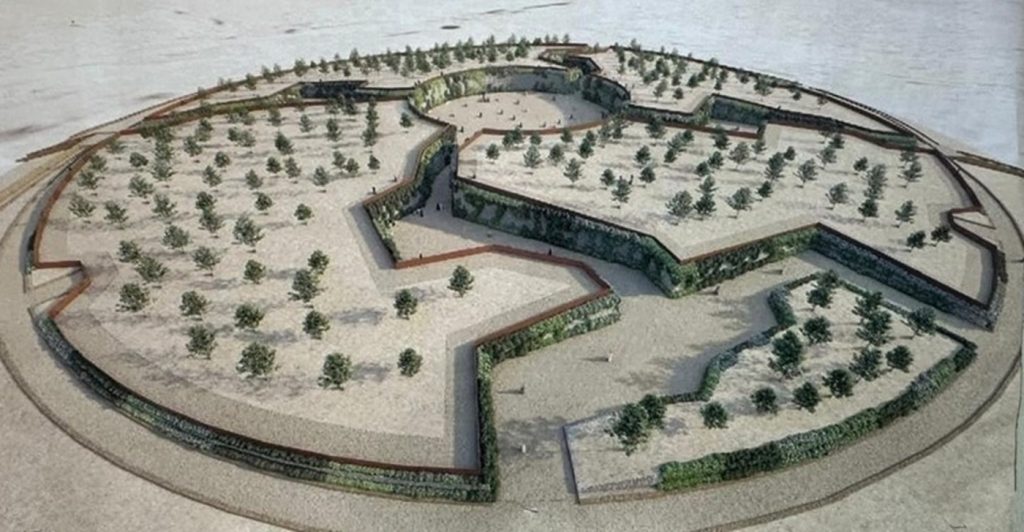
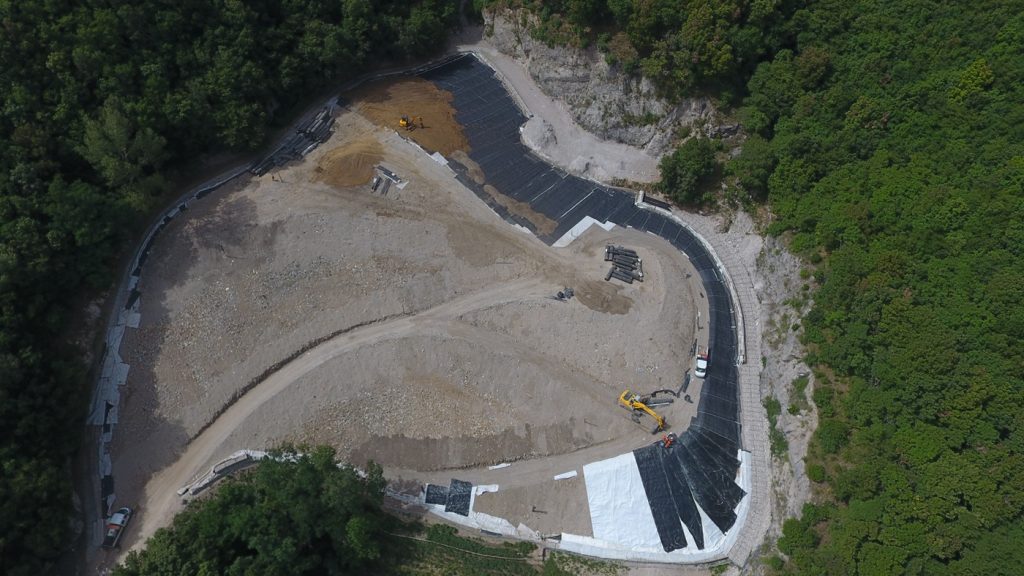
The former landfill site in Cava de’ Tirreni is located in an area of particular scenic and tourist value, a crossing point between the Amalfi Coast and the Campania hinterland. Set in an area frequented by hikers and visitors, the site had long been a critical issue, both from an environmental point of view and in terms of the image of the area. Instability, the risk of percolation and erosion processes were putting pressure on the natural balance of the area, making structural intervention necessary.
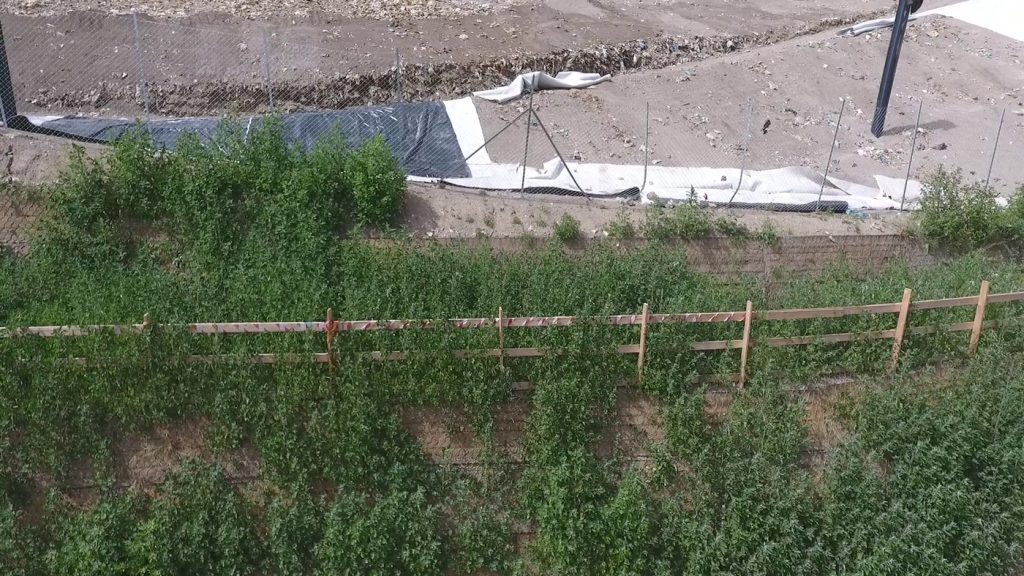
In a case such as this, the need for intervention was primarily regulatory: in the absence of a party responsible for post-operational management – as is the case with “orphan” landfills – public action becomes inevitable. Added to this is a further factor of complexity: spontaneous vegetation, while giving an appearance of naturalness, can hide conditions of degradation and delay the perception of risk. Securing the site therefore required careful restoration of its conditions, starting with preliminary surface remediation and profile remodelling operations.
Identifying the best technical solution
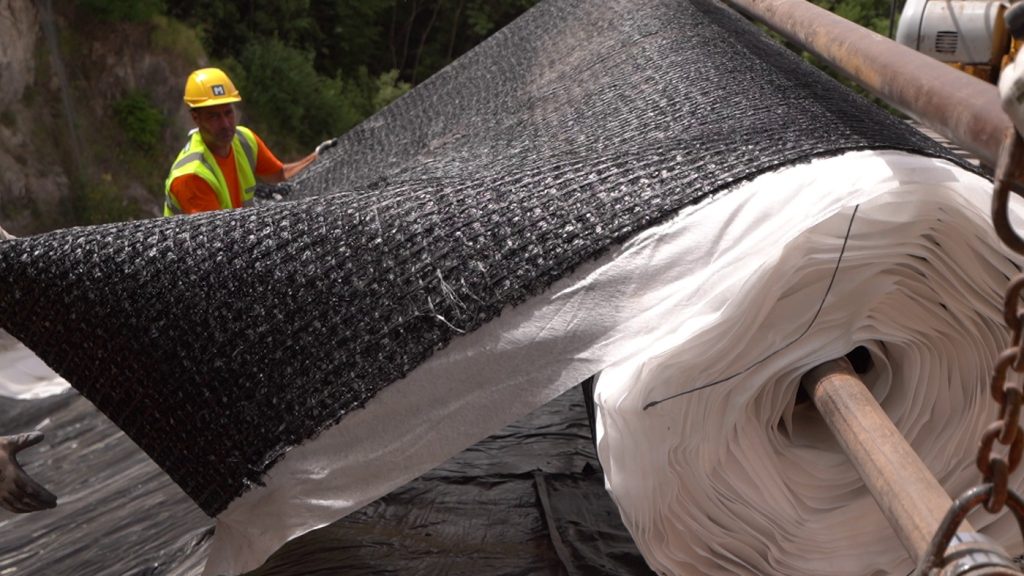
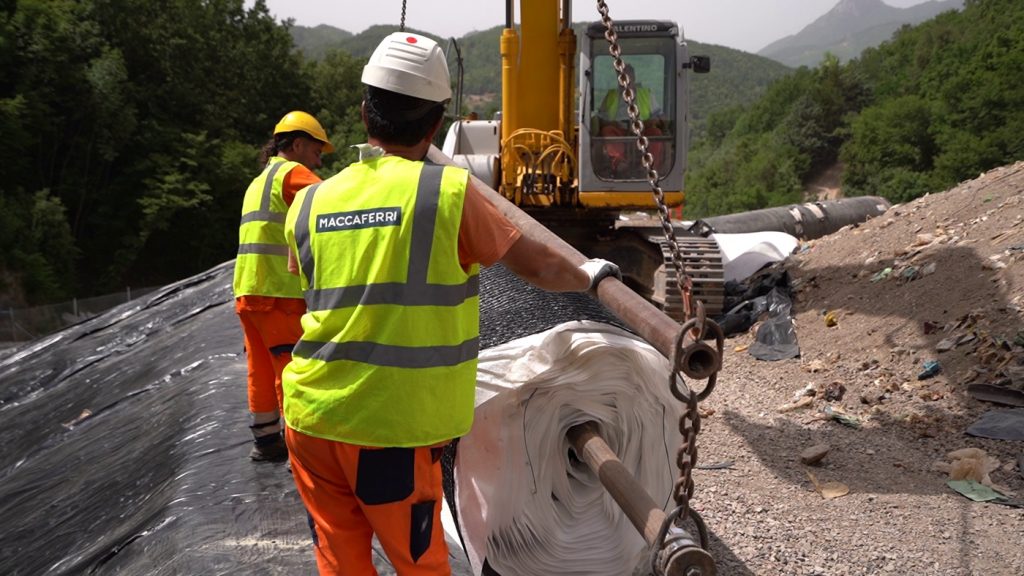
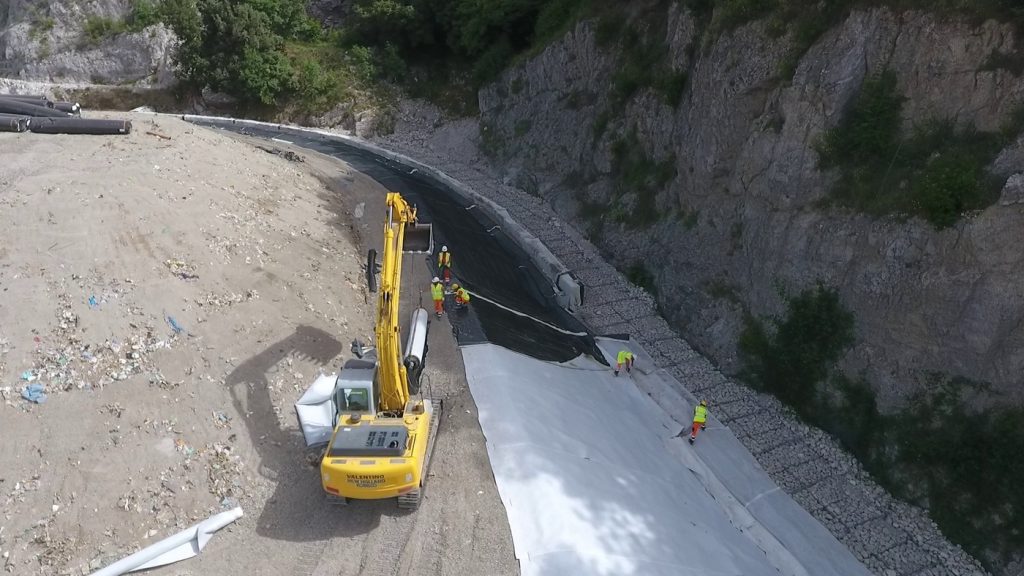
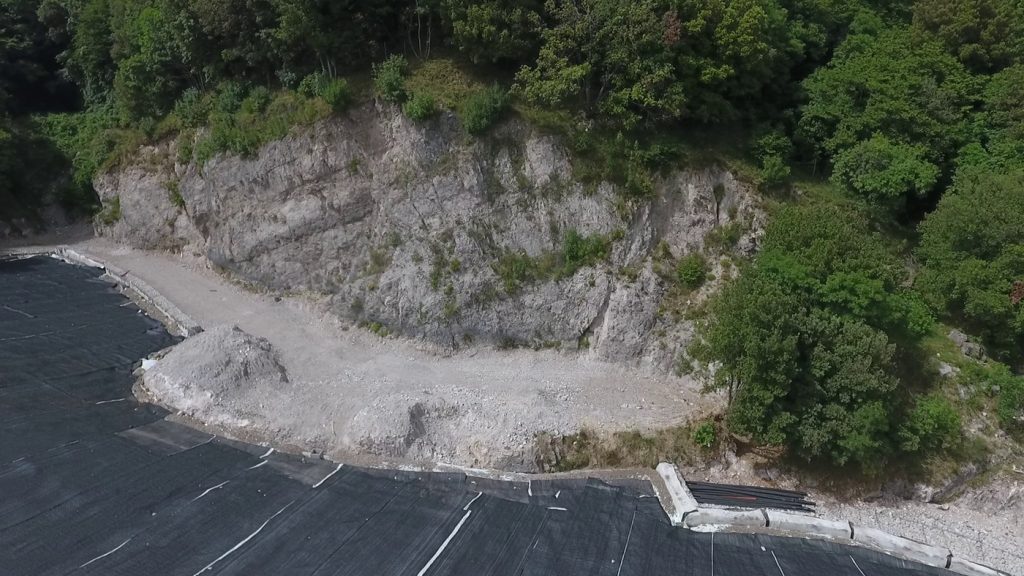
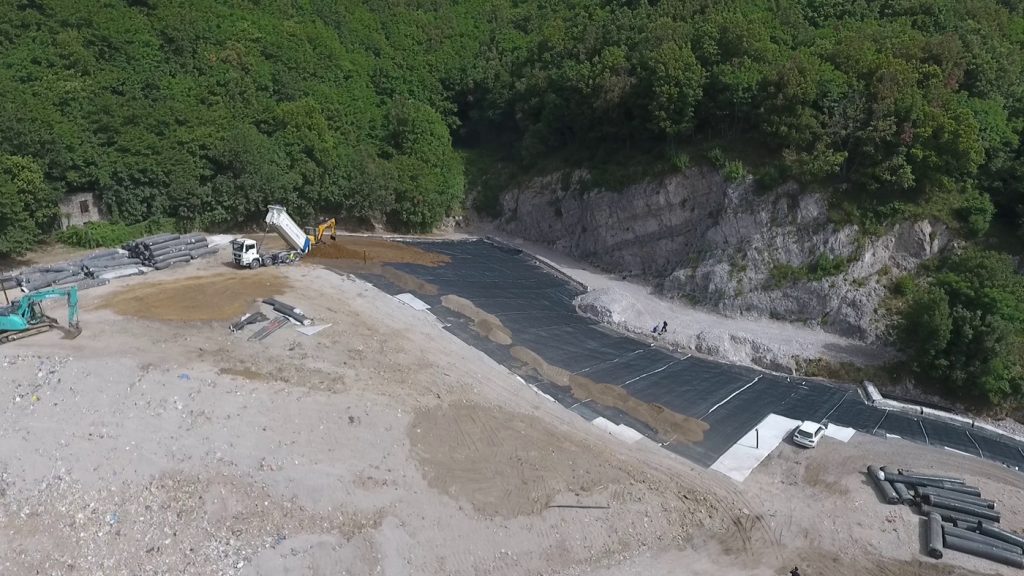
Maccaferri’s adoption of the ‘Geosynthetic Multicomposite’ was the result of a technical process aimed at simultaneously resolving the various critical issues at the landfill site. The system made it possible to rebuild a stable slope structure, ensure the waterproofing of the surface layers and guarantee proper water management. The intervention was carried out in stages: risk analysis, definition of the volumes to be contained, reprofiling of the waste according to the project slopes, installation of geosynthetics and preparation of the surface for morphological and landscape recovery.
From a regulatory point of view, the operational reference remains the closure stratigraphy indicated by the regulations: traditionally, 50 cm of gravel for biogas management, 50 cm of clay for waterproofing, an additional drainage layer to intercept infiltrations and one metre of topsoil to promote renaturalisation. Performance equivalence has made it possible to replace the natural layers with dedicated geosynthetics: a draining geocomposite for biogas, a bentonite GCL for waterproofing and, on the slopes, a multicomposite that integrates drainage and three-dimensional reinforcement. This integration reduces the number of layers, improves overall stability and simplifies the construction phases, with both technical and operational advantages (faster installation, fewer steps and greater controllability of the installation; more technical details available here). In projects of this type, the boundary between natural and artificial dissolves: controlled renaturalisation is not “original nature”, but neither is it simply “concrete”. It is augmented and engineered nature, which requires care, operation and management.
A far-reaching impact on the local area
The redevelopment of the area has brought tangible benefits to the local area. The stabilisation of the slope and the securing of the soil have eliminated a source of risk perceived by citizens, local authorities and operators, improving the overall image of the valley and increasing the possibility of using the surrounding spaces. In this sense, the technical closure is a prerequisite for the possible coherent reuse of compromised areas: from photovoltaic installations to controlled renaturalisation and the creation of paths and green spaces. The final decisions remain with the public client, but the intervention has already restored a positive function to the site within the local context.
The project reflects Maccaferri’s approach to land protection, based on integrated and durable solutions, in line with a climate adaptation strategy geared towards the resilience of environmental infrastructure. The durability of the work, water management and erosion control become central elements in reducing the vulnerability of areas exposed to increasingly intense weather events. In this context, environmental engineering is a concrete tool for prevention and protection, capable of responding to the needs of communities and supporting long-term sustainable recovery processes. Maintenance becomes a modern form of environmental protection and a “spatial contract” with territories and communities.
Article by the Second Nature editorial team, with the contribution of Massimiliano Mongiorgi, Area Manager at Officine Maccaferri.